Who owns the whole journey?
I’ve been thinking about Friday’s emergency alert, less about whether it should have been sent, and more about who owns the whole journey?
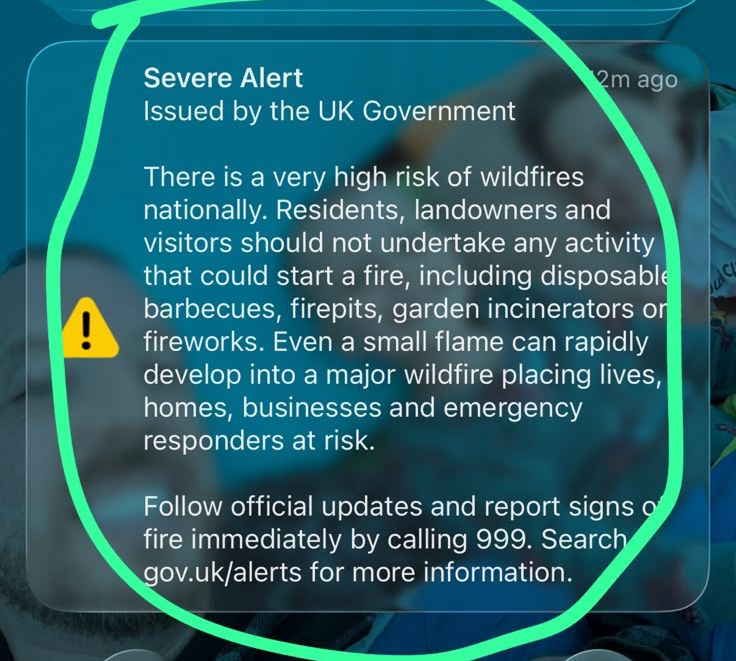
I’ve seen plenty of debate about whether the wildfire risk justified a severe alert.
Having returned from holiday recently to find the field three metres from the back of my house on fire, and watching it spread through a neighbour’s bushes in minutes whilst fire services struggled to get into the field and battle it, I’m not going to argue that fire risk shouldn’t be taken seriously.
The content itself could definitely have been easier to scan. Nick Hughes has written about that far better than I could.
But something else stood out to me. Almost immediately afterwards, fire services were having to clarify:
Please don’t call us to report people having BBQs.
And that makes me wonder about the service behind the content.
Who was in the room when they wrote the alert?
Were fire services involved? Police? The people who would receive the calls and deal with the behaviour the alert might generate?
How did they triage all of this?
I assume we can put more pressure on already struggling services?
Because designing the alert isn’t just about getting the words right, it’s about understanding what people will do next.
That feels like the bigger service design question here.